

For every student, academics play an important role in shaping a career path. They can influence professional opportunities and how students prepare for future challenges.
Your academic journey is an important phase that helps guide you through the process. But sometimes, it becomes difficult to cope with everything on the academic path. When the pressure of attending lectures and quizzes becomes too much, many students realize it is more efficient to hire a professional to get assignment support.
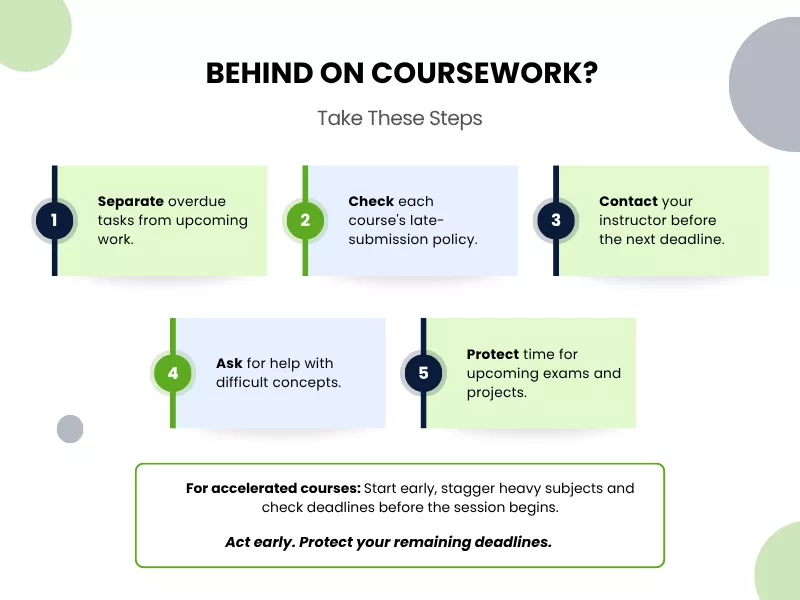
When you have so much on your plate already, the assignments begin to feel like a burden. If you are not making time for it, submitting it on time can become very difficult. Moreover, the work completed in haste can be more prone to errors. So what should you do in such scenarios?
One of the advantages of hiring professionals is that the experts can also help you with those topics or subjects where you are falling behind and for which you are unable to take guidance from your professors. You must hire experts who are proficient in the required subjects and hold high qualifications. When you hire reliable experts, you are actually reducing your stress levels. This, in turn, will help you focus more on the basic curriculum and perform better.
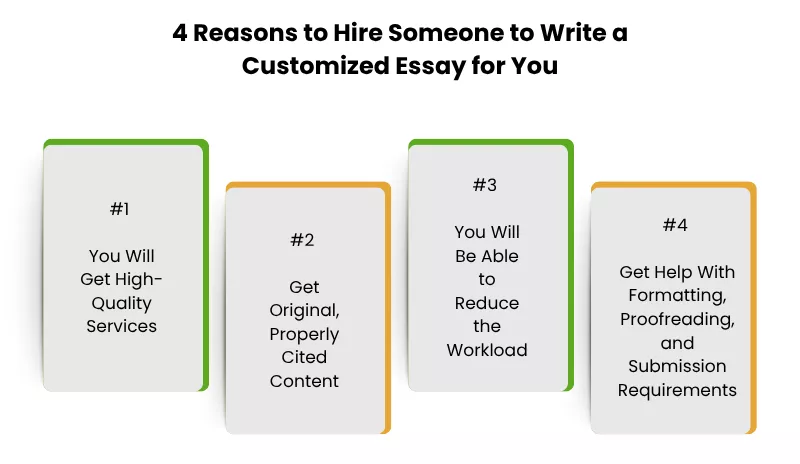
There are multiple reasons why students are relying on experts for homework and assignment support. Some of the challenges that compel them are:
Academic pressure can leave students overwhelmed, as there is so much of the syllabus to cover, and there is also urgency to finish the assignments on time. Students really feel overwhelmed, getting confused about what to prioritise. There is also added pressure to score a high GPA, which ultimately leads students to seek academic support.
Students who work while studying and manage family responsibilities often have limited time for homework and assignments. Juggling classes, schedules, household commitments, and academic deadlines makes it difficult to maintain a consistent study routine. In such a situation, getting appropriate academic support may help some students manage their time more effectively.
Students often understand theoretical concepts but struggle to apply them to real-world situations, case studies, and practical problems. Assignments may require more than explaining a theory, as students need to demonstrate how it works in a specific context, justify their application with evidence and evaluate the results.
Assignment instructions are not always easy to interpret. Students may be unsure about what the question is asking, how to structure the assignment, or what the grading criteria require. The uncertainty leads to wasted time, irrelevant content, and missed requirements. But an experienced professional can help interpret assignment requirements and identify an appropriate approach.
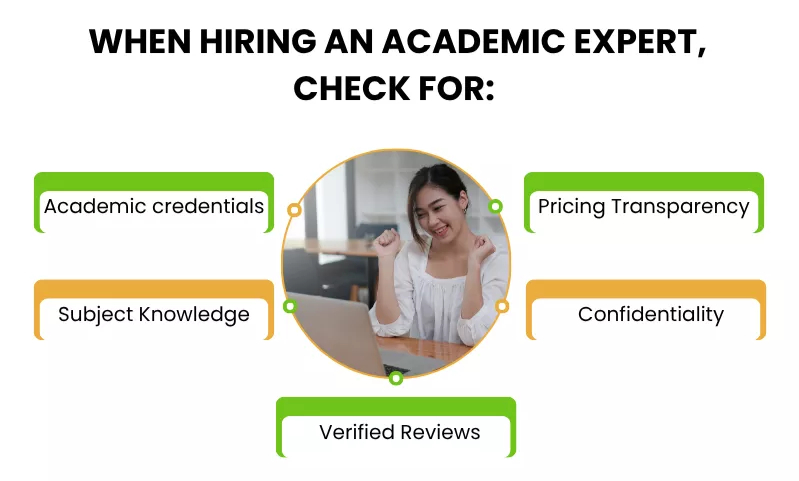
Before you hire an expert, you must look beyond the attractive profiles and low prices. Some of the factors you must consider while communicating with an online class tutor are:
Look for qualifications that are directly related to your subject or course. Hire experts who have advanced credentials like a master’s, PhD, CPA, CFA, and others to indicate specialized expertise. Apart from just academic qualifications, check work experience and knowledge of the syllabus, software, and academic level.
Choose an online expert who brings in-depth knowledge and research experience in a particular subject, rather than someone who claims to cover a wide range of topics. For example: an accounting expert should understand topics on financial accounting, management accounting, and taxation and not just general business concepts.
Before hiring someone to take your online class, check genuine and verifiable reviews rather than solely relying on testimonials displayed on the service provider’s website. Pay attention to reviews from verified or identifiable users, recent reviews that reflect current service quality, and comments about specific subjects and assignments. You get genuine reviews on our service.
Confidentiality plays an important role when choosing academic support. Check whether the platform offering assignment services has clear privacy measures, secure communication, and policies explaining how your documents and other sensitive information are handled. Make sure your work and information are not shared with third parties without permission.
Make sure you understand exactly what you are paying for before hiring an expert. Check for clear upfront pricing, no hidden charges, and flexible pricing options based on assignment length, complexity, deadline, and academic level. A quote should clearly state what is included in the price.

Check how experts can actually help you:
When you have enrolled in a course or a degree program, you understand very well the importance of scores and good grades that you would be getting based on the quality and timely delivery of assignments and homework. If you get caught up with other academic work and are unable to complete assignments on time, there is a high chance you would feel overwhelmed. So, rather than getting into such a situation, students may choose to seek expert support who can help you with academic papers, homework, and assignments and also allow you to “take my online class for me” for class assistance.
When you do not have time for the assignments, completing assignments in a rush can feel overwhelming, leading to frequent errors. When you are trying to complete the assignments in haste, you might end up making a lot of mistakes, and sometimes the work may even seem plagiarized. That’s something you definitely don’t want. It will have a huge impact on your grades. When you’re hiring experts or professionals for your academic assignments, you can expect professionally reviewed work.
Besides this, the experts would verify the work after completion and make improvements if required. This can help improve the accuracy and consistency of the work. Experts may review assignments as part of a quality assurance process to identify and correct errors. Experts write assignments that comply with academic integrity standards. Your assignment is thoroughly proofread before submission.
While you are studying, it is not necessary that you have a good understanding of all the topics. Some topics can be really complex, and you would find it difficult to complete the assignments that are dependent on those topics. So, rather than making mistakes, it is essential that you hire experts who have a good understanding of your complex academic topics. The experts can also help you with those topics or subjects where you are falling behind and for which you are unable to get guidance from your professors.
When you are taking up an online course or a degree program, it is not just the homework/assignments and lectures that are important for you, but many other things that hold more significance, such as quizzes, exams, and presentations. All these things need proper time and preparation to get good scores. If the students remain stuck only on completing homework, they will not be able to focus on other things. Thus, sharing the load by paying someone to complete your homework can make your academic workload far more manageable.
Experienced assignment experts can support students with a wide range of academic assignments, adapting their approach to the subject, academic level, requirements, and assessment criteria. When you pay someone to do my homework, you get assistance with different types of essays on diverse topics, well-structured case studies, quality research papers, reports, literature reviews, dissertations, and theses. Experts also assist with capstone projects and practical work, connecting theories and frameworks to real-world scenarios.
The responsibility of assignment help experts does not end with delivering written assignments. They are equally present when you need help with revisions and last- minute modifications. The experts check the feedback given by professors and make the changes accordingly. They strengthen arguments, improve structure and clarity, correct formatting issues, and also rewrite sections as required. This saves you from the last-minute chaos.
Every assignment has unique criteria and formatting styles like APA, MLA, Chicago, and needs to meet a certain rubric. Assignment experts understand this, tailoring each assignment strictly to the formatting, structuring, and grading expectations. Experts can review the syllabus and the assignment requirements.
Quick answer: Paying someone to take my online class is only safe when you choose a reliable service provider that protects their customers’ data with a strict privacy policy, offers money-back assurance, provides flexible payment options, and has a team of subject-matter experts who understand students’ real struggles and offer a variety of class assistance solutions as per individual needs.
Many universities and educational institutions consistently provide online education to millions of students worldwide. Students from any region or country can enroll and start studying online. One thing students often skip when enrolling in courses or educational programs is carefully checking the syllabus. Along with multiple subjects, students have to attend regular online classes, prepare for online exams and tests, complete online assignments, and also focus on co-curricular activities.
When students find it difficult to juggle the academic courses and exams, they pay someone to take the online classes. But the first question is: Is it safe to pay someone to take my online classes? Will the person you hire for online classes do a good job?
To answer these questions, you need a solid understanding of how the system works and why professional help matters. So let’s get started.

Many websites and professionals can help by taking online classes on your behalf. Before you hire someone to take online classes for you, understand what these professionals have to offer you.
You can reap the full benefits of the online class help services based on your preferences. You are paying them. So, you need to understand everything beforehand.
Digital platforms are a boon because they increase convenience for students. But the scammers are taking advantage of the system. They are opening fake agencies to lure students and do not provide any good services.
Besides, they charge a hefty amount for low-quality services. You should be aware of such agencies and not fall into their traps.
When choosing agencies, research properly and focus on the key facts. You can check their websites, learn about the professionals, and check the reviews of the professionals. Also, learn about the professionals’ qualifications and their experience in the industry.
It will give you a fair idea of whether the agency you are selecting to work with is authentic or not. The most important point is that authentic agencies understand you are a student looking for help and won’t charge exorbitant fees.
Students also worry: “Will my university find out if I use a class-taking service?” But experts ensure proper safety. You can even decide to work with professionals rather than agencies. But you need to make sure they are professional and take the work seriously.
You can consult their past clients and check the reviews and ratings, qualifications, and experience.
Sometimes, someone may take your money and not show up for the tests/examinations or online classes. Therefore, it is always better to do a background check for your safety.
If the person is not taking responsibility, or you do not find them authentic, do not work with them.
Most often, universities and educational institutions focus on the overall quality of submitted assignments and the scores students achieve. They do not interfere with getting to know who is taking the online classes or on whose behalf.
Institutions focus on distributing, creating, and scheduling assignments. They will check whether every student has enrolled in the classes and attends regularly. They will also check that students receive the assigned work and submit it before the deadline.
All you have to do is ensure that, while the professional attends the online classes on your behalf or does your work, it doesn’t lead to any issues. There should be no issues of plagiarism or low-quality work.
When hiring an online class assistance service, safety extends far beyond academic quality. Reputable providers implement strict technical, administrative, and legal safeguards to protect your identity, personal information, and academic standing.
Legitimate services treat student data with strict confidentiality. Look for platforms that guarantee data security:
Educational institutions monitor login locations and biometric patterns to detect unauthorized access. Reliable assistance providers employ advanced operational security to keep your account safe:
Protecting your financial transactions is a critical part of choosing a service:
Understanding the legal and institutional landscape ensures you make informed choices:

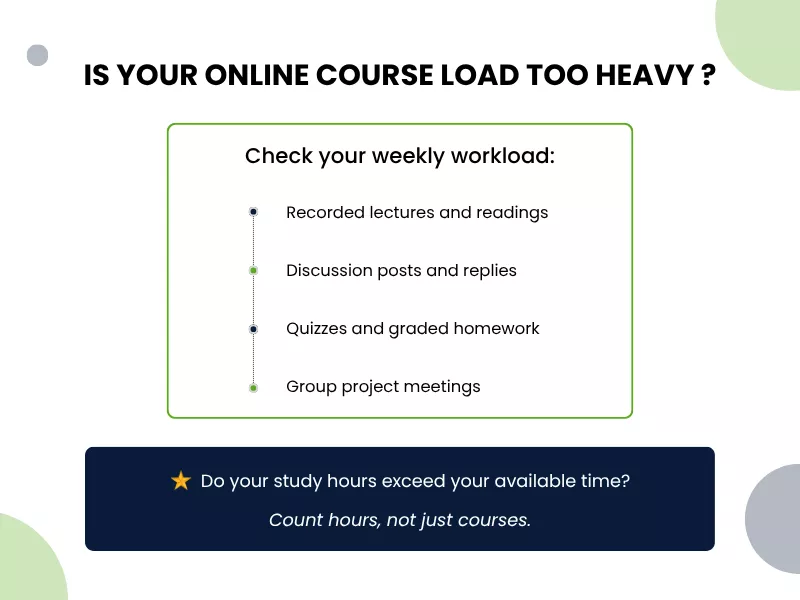
Although online classes are easy and flexible, students often struggle to manage the coursework alongside other responsibilities.
Paying someone to take online classes can be beneficial. In simple words, you are buying some time for yourself. You can think of it as extra time to complete pending work and meet other commitments.
The professional who takes online classes on your behalf will help you with exam preparation, notes, and regular homework. These professionals have strong educational backgrounds and experience to support your academic work.
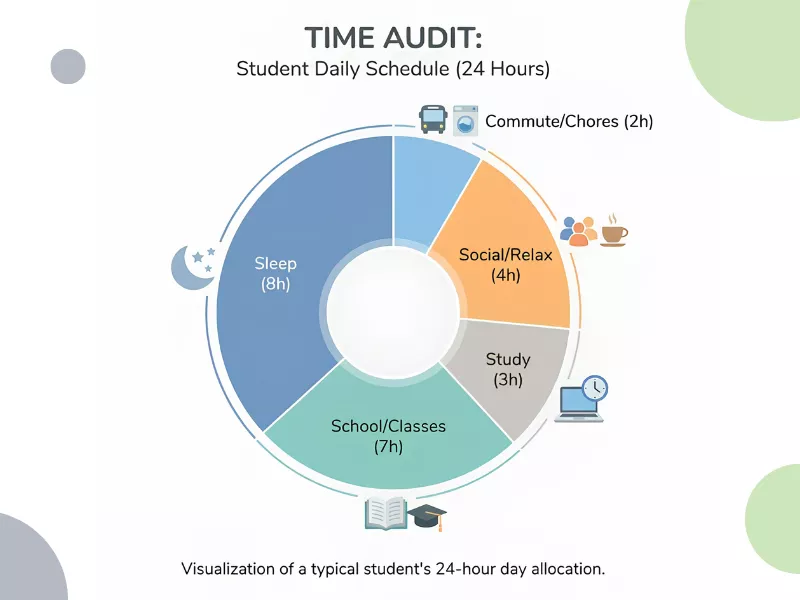
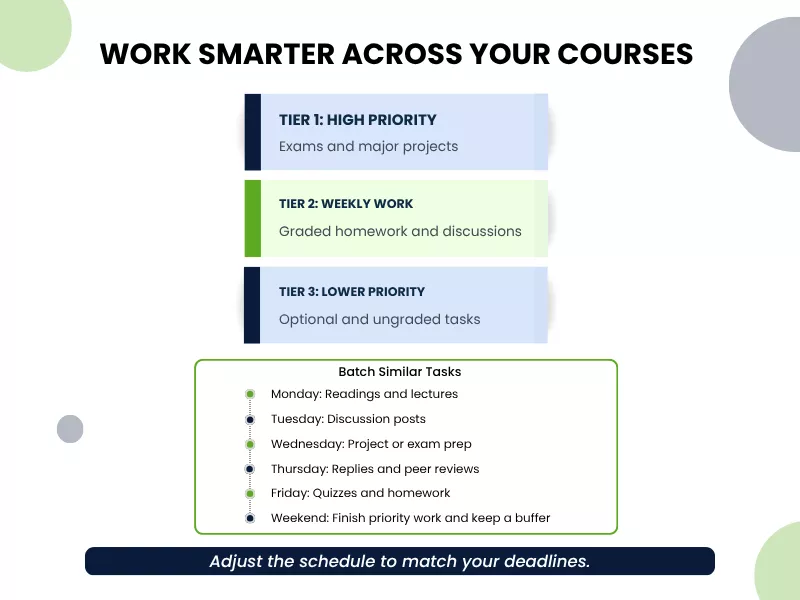
When you have many subjects, exams, and lectures, it becomes difficult to manage your schedule. But when you are paying someone to take my online class, it is easy to manage your time and take control of everything.
You can use the time to do extensive research for the assignments and homework. Your work quality will improve. The best aspect is that you can submit the assignments and homework before the deadlines.
Self-study is essential to score well in your exams, tests, and quizzes. Co-curricular activities also add credit to your academic performance. If you participate in these activities, they can help increase your overall credit score.
But if you get stuck with your online classes, assignments, and exams, you will not have time for such activities and will need to focus on self-study.
So it is always better to hire someone who can attend online classes for you and give you time for co-curricular activities and studies.
When a professional attends online classes on your behalf, you can accomplish and submit high-quality work. All of this reduces stress and provides peace of mind. You may have commitments at home, and you don’t have to delay them.
Students’ lives are tough, as they have to work extra hard to secure a good job or admission to better institutes for future studies. In simple words, students are trying to build their careers and secure upcoming opportunities. While planning all these things, students take up multiple online and offline courses.
Because of the heavy workload, students face stress and pressure that can affect their studies, exams, and overall performance.
When you are looking to pay someone to take online classes on your behalf, consult BoostMyGrades. They have several highly qualified academic professionals with extensive experience across a wide range of subjects. The best part is that these professionals don’t charge you unreasonably for their services. You can visit the website to see the different services offered to students.
Struggling to manage an online class? You are not alone. Reddit is full of students asking how to tackle online classes and deadlines better.
Though you can manage deadlines by starting homework early, by using a calculator to do problems, or by getting explanations from AI models, the best and easiest choice for students is to hire someone to take their online classes. If you want to hire someone to take your online class, then this blog is for you.
From why it is a preferred choice and how it helps to its advantages and cautions, this blog has it all.
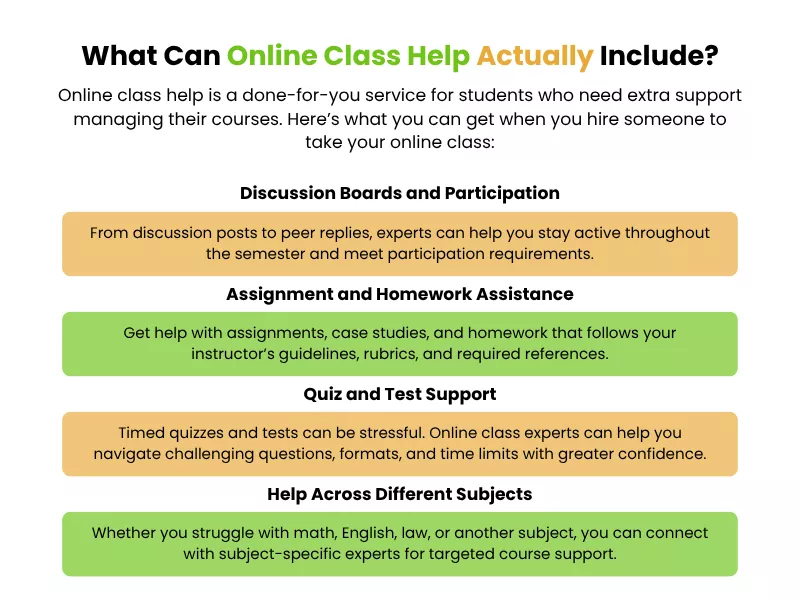
Put loosely, online class help is a done-for-you service. This means you hire a brain when your brain is not braining, so you can still get top grades. Here’s what you get when you hire someone to take your online class:
From discussion posts to exams, a take my online class service provides end-to-end support for the entire semester. So, if you cannot respond to peers properly, they will do it for you. They will even participate in discussion board posts so your instructor counts you as an active student, improving your impression in the class.
Imagine you have to write a law case study. You are already a good student and can be a great advocate because of your advocacy skills, but you lack the patience or writing skills. This is where they come in: once you get the degree, you can use ChatGPT to write your claim or deposition, but until then, your assignments and homework must be 100% original. When you hire an expert to do your homework and assignment, you get a polished assignment free of AI or plagiarism, meeting the instructor’s rubrics and references.
One of the major benefits of hiring someone to take a test for you is that they don’t feel the jitters you do. Online tests and timed quizzes are challenging. You must have knowledge of the grading system, know the concept well enough to be quick to solve the questions, and also must enter the answers in the correct format, or your correct answer will be marked wrong because you did not follow the right format. But these online test-takers already know this. So, for them it’s a walk in the park.
They say, “Jack of all trades, master of none.” But your institution expects you to be good at all subjects, so what happens when one of those subjects is math, the one you hate the most? Or maybe English, where prose bores you to death? You simply knock on the door of an online class taker. You can get access to subject experts across multiple subjects and tackle those difficult courses without all the hassle.
Now, if you think hiring someone is a good idea, well, let’s move on to the pros. But if you are in a dilemma, you may want to read “Why should I hire someone to take my online class?”
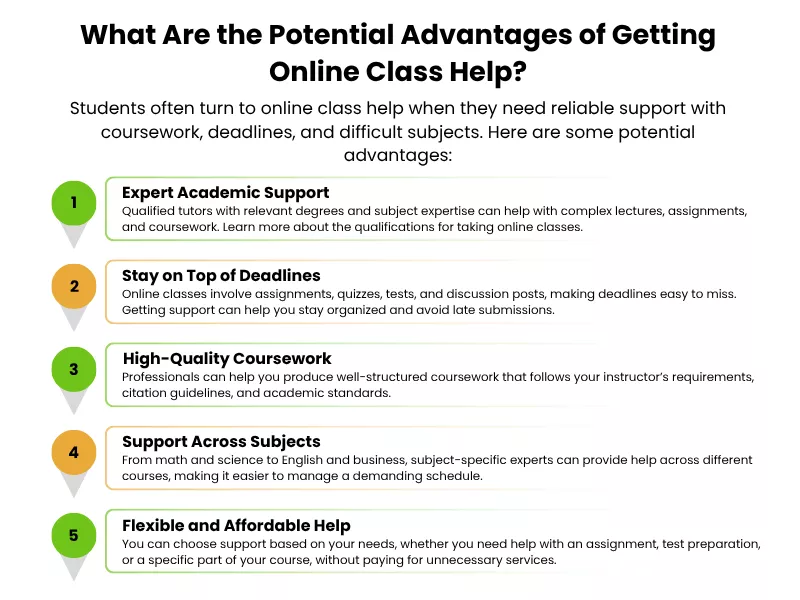
Many advantages lead students to hire others and pay them to take online classes for them. So what are those reasons? Let’s check them out!
Usually, most students worry that when they hire someone, they won’t have the skills and expertise to understand the lectures and provide credible support to complete the online class. The people you hire aren’t random; they have the qualifications to take online classes.
They are experts with degrees and PhDs from some of the country’s top universities and can understand even complex online lectures. Besides this, you can ensure that the quality of the work will be extremely high, and you would not have to worry about the class credibility.
This goes without saying: if you hire professionals, you will not have to worry about whether your assignments will be completed on time or not. Just imagine if you are not hiring someone, and at the last moment, you get to know that the major portion of your assignments is still pending. That would be incredibly annoying. Missing out on the assignment deadlines might jeopardize your chances to get a good score in the class and have a huge impact on your career.
Online classes aren’t just about attending video lectures. They include quizzes, tests, and follow-ups on the discussion board. With all this, it is easy to miss out on assignment deadlines. But not anymore. When you hire someone and pay them to take online classes for you, you will not have to be anxious all the time about different deadlines.
Sometimes, when students don’t have enough time to complete assignments, they use plagiarized content without following citation and reference guidelines, which are essential for completing assignments and homework. The professionals that you hire for taking online classes have the expertise to provide you with high-quality work that will help you get good grades and increase your credibility.
When you enroll in online classes or programs, you’ll have multiple subjects to attend, homework to complete, and assignments to submit by their due dates. So how will you hire? Will you hire one person for each subject? Or do you want help with all subjects? Experts will help with whichever subjects you need and provide complete work you can submit on time. This is how experts improve your grades in online classes.
When you are paying someone to attend your online classes and complete your assignments, submissions, and essays, you do not have to burn a hole in your pocket. The services provided by these academic experts are extremely affordable, and they understand that you, as a student, won’t be able to hire expensive services. You can even hire them for specific parts of your course, such as assignment writing, taking online tests, or attending classes only.
Whether or not online class help is worth the cost depends on what you need and how much coursework you need to manage. Instead of looking only at the service cost, consider the time you would otherwise spend on assignments, quizzes, discussion posts, and other course requirements.
For instance, if your academic aid depends on your college credits, you can hire a subject expert to complete the coursework and get an A/B grade. This can help you keep your academic aid. While you may think of Chegg or ChatGPT, Chegg answers aren’t verified and can be outdated, and getting caught for AI or plagiarism can lead to severe consequences. You will lose grades and reputation.
If you want to secure top grades, spending $50 for a discussion post or $1100 for full class support is much less than enrolling again in the class, losing academic aid, or getting flagged for plagiarized content.
Hiring someone to take your online classes is a big decision; one wrong step may lead to serious consequences. Therefore, compare services before finalizing an online class help service. Let’s understand how BoostMyGrade actually fits the idea of a reliable class-taking service provider:
At BoostMyGrade, we have:
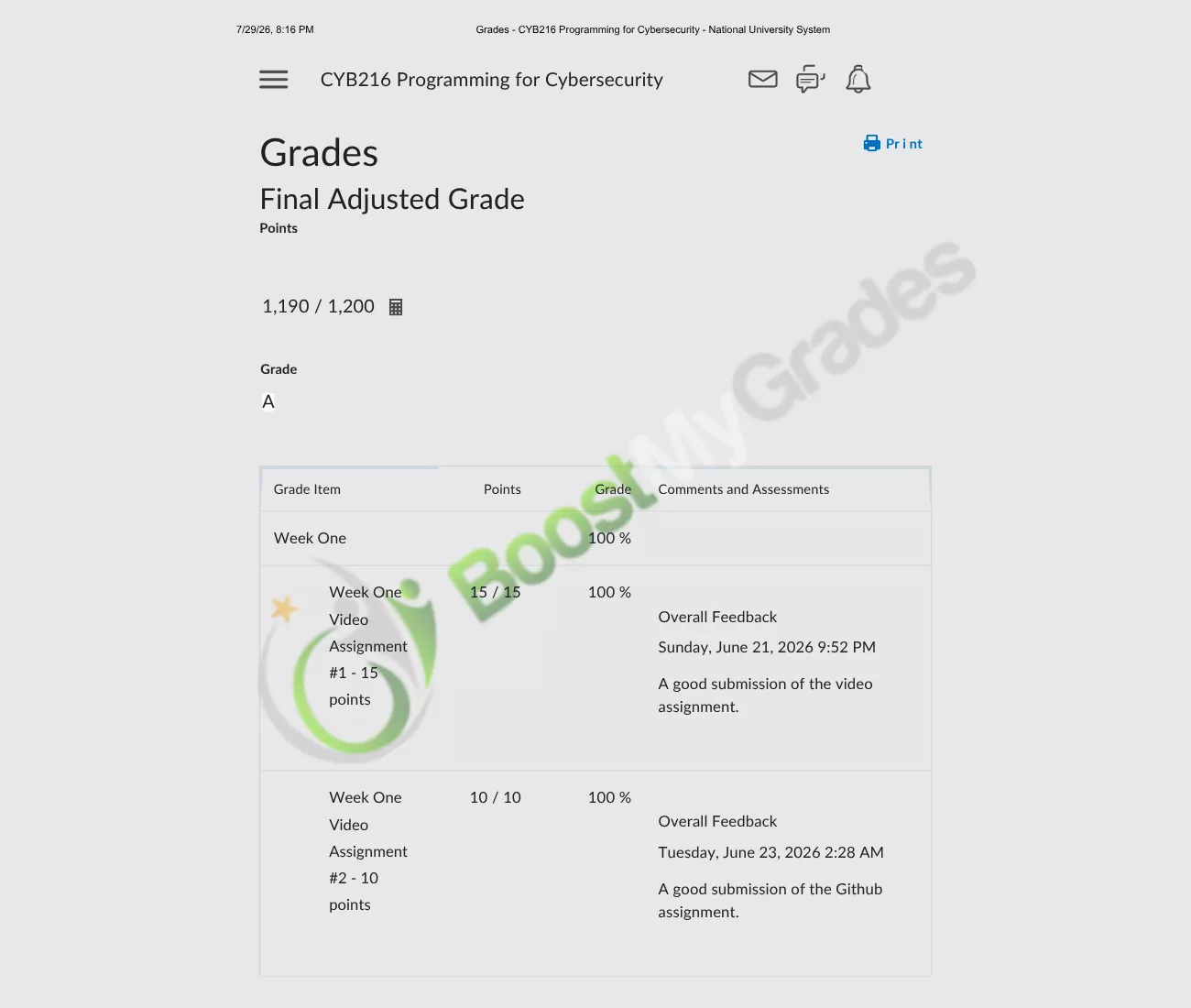
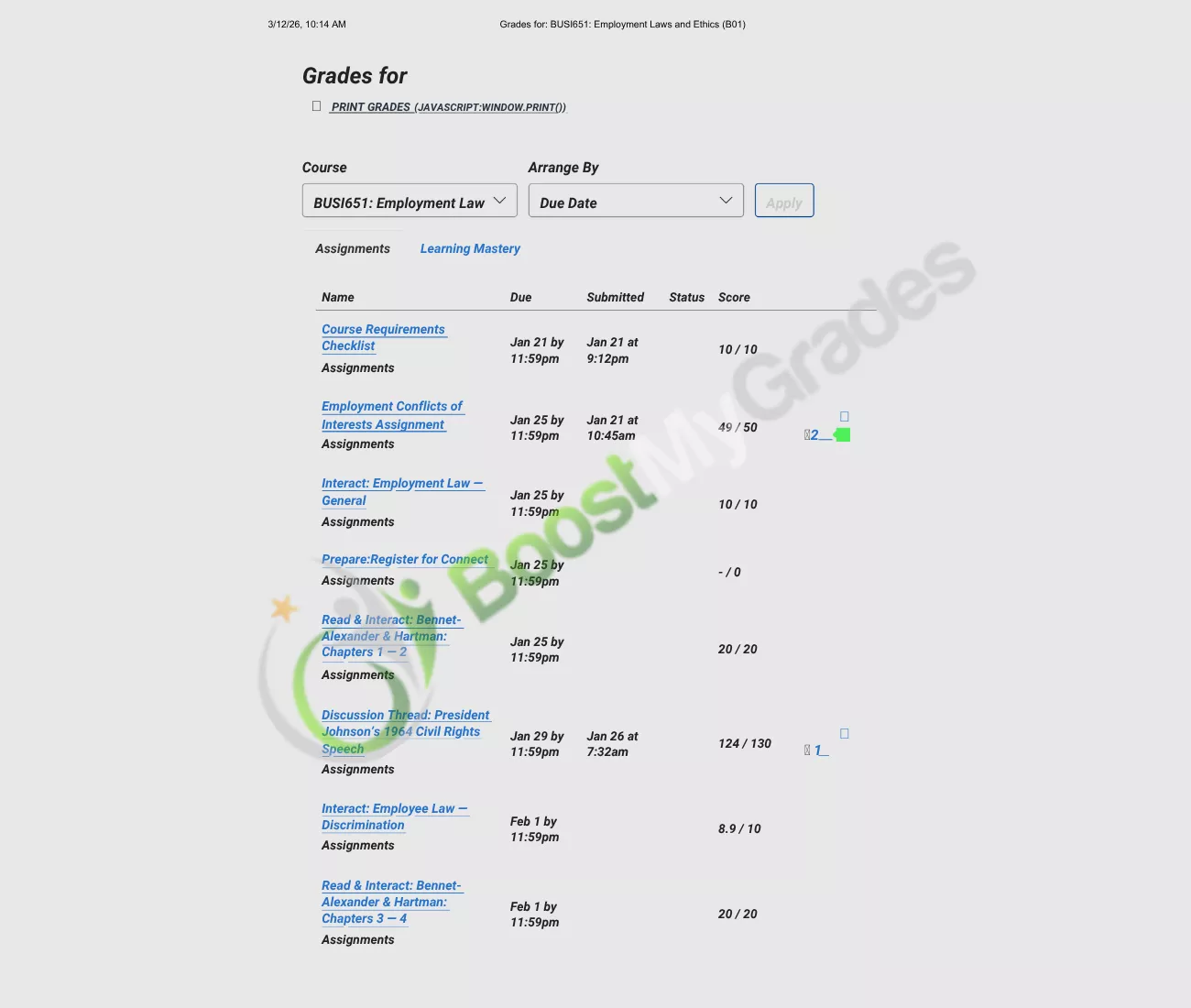
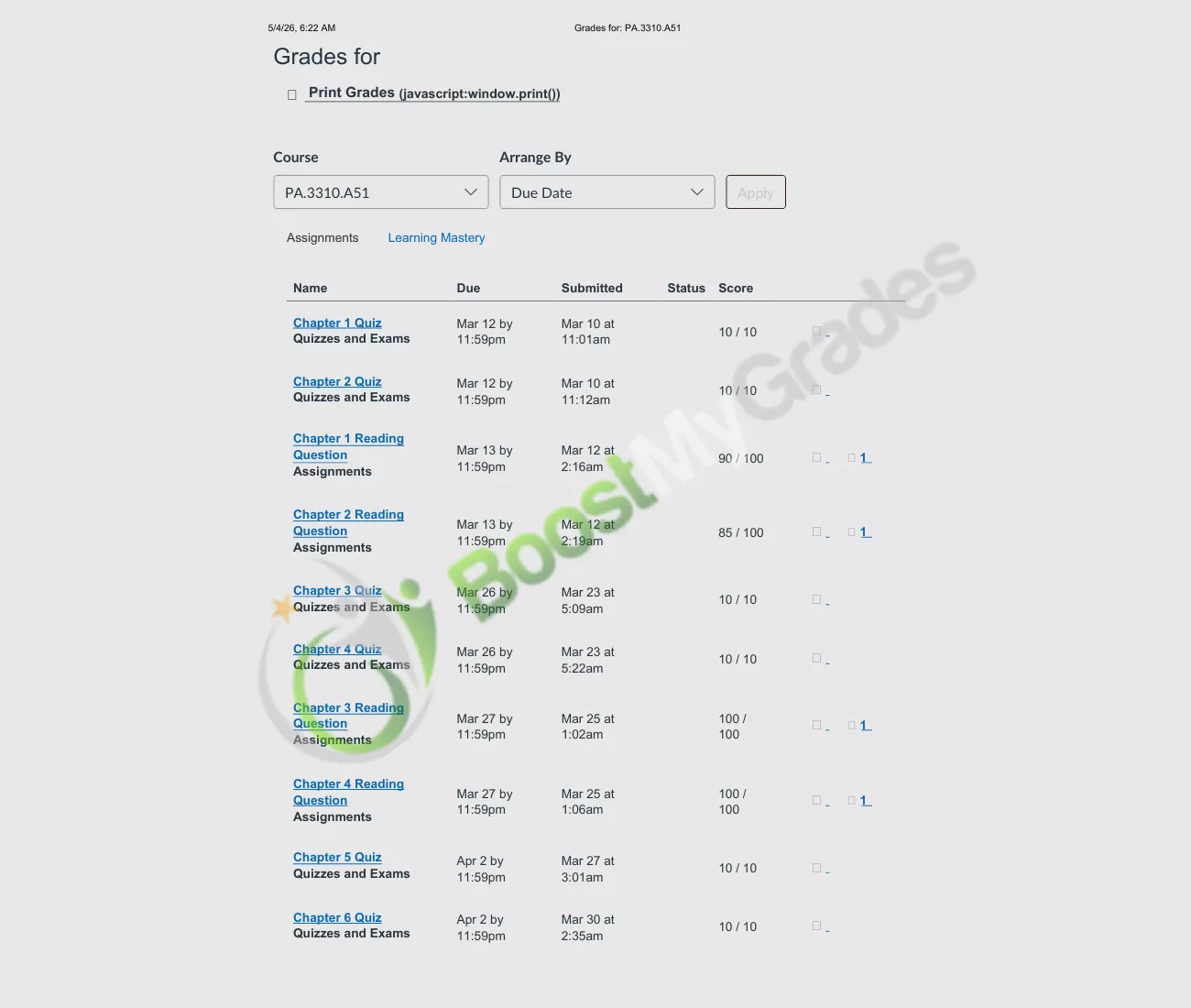
Check out the scorecards below:
Group projects often sound like teamwork and fun, but they can feel more like a test of patience. One is busy, another just ghosts you, deadlines get missed, and coordination and progress fall apart. So, clearly, managing group projects in online classes is a tough nut to crack. What should be a shared responsibility can, in a blink, turn into a burden for one.
When you are managing everything on a screen, keeping up with an inconsistent schedule, communication, and submission – everything just goes haywire. In this blog, you will learn why it feels so overwhelming, practical strategies to overcome it, and how to lead an online group project.
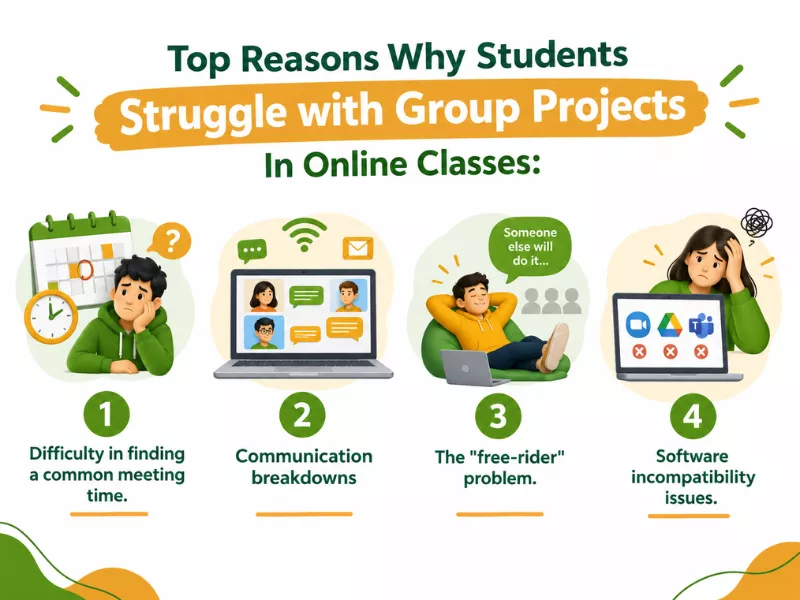
Some of the main reasons why students struggle with group projects in online classes are:
One of the biggest drivers of group project pain in online classes is communication breakdowns. Without face-to-face interaction, you can misunderstand messages, as text cannot carry tone, facial expressions, or body language. Delayed responses also create a lot of uncertainty.
A delay of hours becomes ambiguous – is the person busy, ignoring the group, or stuck on other parts? You can fill that gap with assumptions, which naturally breeds resentment and delay. Also, phrasing that seems normal in one culture may seem overly direct or vague in another, creating confusion.
It is the tendency to put in less effort when working as part of a group than when working individually. The bigger and more anonymous a group feels, the easier it is to assume that someone will handle the work. This is because the participants may never see each other, or there is a chance of lower personal rapport. Active students may have to rush to finish the unfinished tasks before the submission, creating more pressure.
Others may quietly rely on the students who are already carrying the work. Therefore, the “free rider” can end up with the same grade as everyone else.
Technology-related problems are one of the main factors that make group projects in online classes hard. Not every student has a reliable laptop, a stable internet connection, or a quiet space to smoothly access the online classes and videos. Also, tool fragmentation creates unnecessary chaos. Groups often end up juggling multiple platforms like project trackers or the LMS itself.
Every tool has a learning curve, and if you are not familiar with, say, the Google Docs version history or the features of a Kanban board, it can disrupt the workflow.
In online classes, especially for group projects with students from different geographical locations, finding a slot that works for everyone can be tough. Also, students may have different approaches to managing project timelines, which can lead to coordination issues.
In person, quick adjustments can happen with a word or a text in passing, but online, even small changes require re-notifying everyone, which automatically raises the stakes of scheduling change. These problems can slow down progress and create frustration.
If you are overwhelmed by these challenges, reach out to experts at BoostMyGrade for the best assistance.
Online group projects are different from the traditional setup, as team members work together through the internet rather than in physical spaces. They use tools like video calls, chats, shared documents, and project management apps to communicate and complete tasks. Some key differences at a glance:
| Aspect | In-person Group Projects | Online Group Projects |
| Primary Interaction | Verbal discussions and live meetings. | Chat apps, video calls, and shared documents. |
| Tool Dependency | Pen, paper, and physical presentation slides. | Screen sharing, project management apps, and cloud storage. |
| Contribution Tracking | Observation-based and informal. | Digital logs and version history. |
| Flexibility | Requires matching schedules. | Supports self-paced work. |
| Primary Friction Point | Finding common meeting time. | Miscommunication, unresponsiveness, and delays. |
Online group projects may sound convenient, but they can be a lonely space. Everyone is working behind separate screens, and teamwork can surprisingly feel solitary. Check how:
In group projects in online classes, students do not have a common physical environment where they can naturally interact, discuss ideas, and read each other’s reactions. All the ambient connection formed in offline classes disappears, with no “in-between” time where relationships can actually bloom. Misunderstandings and dealing with bad group members in online classes make communication even worse.
In this space, accountability can feel more like tracking tasks than working with teammates. It gets reduced to policing instead of trust. Students may hesitate to confront a teammate who is not contributing, as communication already feels distant.
Students work from home or other remote settings, following their own routines with little social energy. The whole appeal is autonomy: your grade, your transcript, your learning, everything is personal. Nobody’s motivation cycle is synced in this process, which makes shared momentum extremely hard to build.

Some effective and practical strategies to cope with the struggles of group projects in online classes are:
Planning a Zoom or Google Meet call to get to know your groupmates as early as possible is the first actionable step to make this process easier. Everyone has their own schedule and methods, and interacting one-to-one at the initial step can help plan better so that everyone can start working at their own pace.
Define how best to communicate and decide upon a time to work collectively. Keep in mind the different time zones and start the work accordingly. This can be really helpful for balancing work and studies.
In the very first meeting, get to know the requirements of the project and consider allocating specific tasks to the best-suited members. Consider setting deadlines for both the individual work and the outcome.
Scheduling recurring group meetings ahead of time can be useful, but do not lose sight of the fact that the real work is completed individually. Break the project into manageable parts and use a shared checklist or project board to monitor progress.
Regular, short, and focused meetings help to keep moving forward without allowing tasks to stall. Meet at consistent intervals and focus on discussing progress, challenges, and solutions rather than lengthy or useless discussions.
Use asynchronous updates between meetings, like a quick message or shared tracker, to keep everyone informed without the need for another call.
Never leave the most difficult sections of the project for the last minute. Identify the challenging areas as early as possible and assign them to teammates with the right skills to tackle them together.
Use short group sessions to solve problems that require multiple perspectives. Set earlier deadlines for difficult sections to allow time for revisions and avoid unnecessary stress and anxiety. If one member finds a helpful resource or solution, share it with the whole team.
Once you have tried to resolve it directly and nothing has changed, it’s time to loop in the instructor. The instructor will not manage the group for you, but can provide guidance, clarify the expectations, and mediate serious and unresolved conflicts to get you back on track. Some of the best moments to loop them in are:
Now, you can also ask our experts to take my online class and get over every challenge in this online class group project journey.
Here are some realistic scenarios that you could also have faced at some point or another during online group projects. Check here:
Four students trying to finish a presentation. One of those students had to make three slides. A day before the deadline, that student stopped replying and missed the group meeting. The other students had to finish that missing work at the last minute, which caused stress and pushed the project back.
Solution: Always set deadlines and check in with every group member. If a group member stops responding, I quickly redistribute that group member’s tasks among the members.
In a group project, five students were working together on a presentation that was due on Monday. Each person was given a task, and one student was in charge of collecting information and finishing their part by Friday. The student kept putting the work off and finally sent it just a few hours before the deadline. Because the other members were waiting for that information to put together the slides, they had no time to finish and practice the presentation. Because of this, the group got very stressed, had to work late, and the final presentation was not as well-prepared as they had hoped.
Solution: Set deadlines for each task and check the progress of each task for every member regularly. If a member is late, the group should find another member quickly to help finish the work.
Some students had to prepare a presentation together. Three of them finished their assigned tasks on time. One student rarely answered messages and did not finish their part. As the deadline approached, the other three students had to finish the work themselves. They felt stressed and frustrated because the workload was not shared equally. This situation shows how unequal participation can create problems in group projects.
Solution: All group members must speak clearly. Finish their assigned tasks on time.The team should set deadlines and move work around early if someone cannot contribute.
Students who want smoother collaboration and better time management tips for online classes can rely on standard tools. Some of the online group project tools for college students that can be useful are:
It is an online tool that helps college students keep track of group projects. Trello works by using boards, lists, and cards to split a project into tasks and stages. It is best for task tracking.
Students can give tasks to group members, set deadlines, share files, and track progress. Trello is useful because it makes teamwork smoother, keeps everyone clear about what they must do, reduces confusion, and makes deadlines easier to see and track.
Trello becomes especially handy when group members cannot meet in person and have to coordinate their work.
Asana is an online project management and collaboration tool that helps college students plan, organize, and manage group projects. It has key features like project views where students can view work as a list or Kanban board, break large tasks into subtasks, and share comments and files.
It is useful for college students because Asana makes teamwork easier, improves time management, and removes discrepancies about who owns what.
It is a tool that combines individual notes and shared team workspaces in one place. Notion helps keep all notes, homework, projects, and group work in one spot. With Notion, students can make pages that many people can share, along with notes and project management.
They can edit the same document at the same time. Notion also lets students build lists of tasks, set dates for when things must be finished, store reference materials, and keep track of how a project moves forward.
Miro is a whiteboard that lets college students work together on projects, brainstorm ideas, and create presentations. Miro gives them a shared space where they can put sticky notes, pictures, diagrams, mind maps, frames, templates, and an infinite canvas for brainstorming.
There are to-do lists, a deadline-tracking system, file sharing, and it allows discussing tasks directly within cards instead of scattered messages.
It is an innovative workspace that gives groups a shared space for visual brainstorming. FigJam lets students brainstorm ideas, make interesting mind maps, sort tasks, add pictures, and give feedback in real time.
FigJam makes teamwork more creative, more engaging, and more organized by acting as a shared digital workspace for team brainstorming. For example, a group can create columns such as: ideas, assigned tasks, in progress, review, and completed.
Want to know how to lead an online group project? These tips can really help you:
Group projects are challenging enough in an offline classroom, but group projects in online classes can simply turn into a hectic mess. When everyone is separated by screens, different levels of commitment and schedules, keeping everyone connected and coordinated can feel like a project in itself. But these challenges also teach us that great teamwork is not about being in the same room, but showing up and working towards the same goal. Hopefully, in this blog, you get acquainted with the real issue, the practical strategies, and the online group project tools for college students, and tips to lead a team. To get help with a hectic online class, hire our experts today and get back on track.
Yes. If your group is not helping or communicating properly, it is reasonable to inform the professor. You can keep the message factual and highly professional so as not to blame anyone.
A reliable approach is to document, communicate properly, and involve the professor. Send one clear follow-up, keep evidence such as messages and emails, and inform your professor as soon as possible.
To split work fairly, make the responsibilities clear, trackable, and balanced from the very beginning. Divide the workload, not just the number of tasks; rotate less popular tasks, ask about strengths and availability.
It depends on the grading policy of the professor. In some online classes, all get the same group grades, and in some, individual contributions are graded separately. The key is to raise the issue before the project is due.
One practical strategy is to choose one primary communication platform, rather than spreading messages across several apps. Good options are Slack, Discord, Microsoft Teams, and LMS platforms like Canvas, Blackboard, etc.
Yes. Peer evaluations can be effective if they are tied to a clear rubric. But it also depends on the course. It helps professors spot and correct uneven contributions.
Hiring an online class help service can be a true lifesaver, unless you end up with low-quality assistance, hidden fees, and no real-time response from the experts. Choosing a reliable online class help service, therefore, can be really challenging for you when there are so many of them, making more or less the same promises.
It is best to sign up for a service after you compare against certain parameters. To choose the best and most suitable, you need to compare before choosing an online class help provider against the qualifications of the experts, privacy measures, pricing transparency, academic integrity, and more.
Here, in this blog, we have summed up the critical features and parameters that you must check before you hand over your credentials.
Online classes are a great help to students who need experts and want to get all their questions answered. The USA market is filled with varying options, ranging from legitimate and highly recommended online class help platforms like BoostMyGrade to even low-quality platforms involved in outright scams. A step-by-step decision checklist can be:
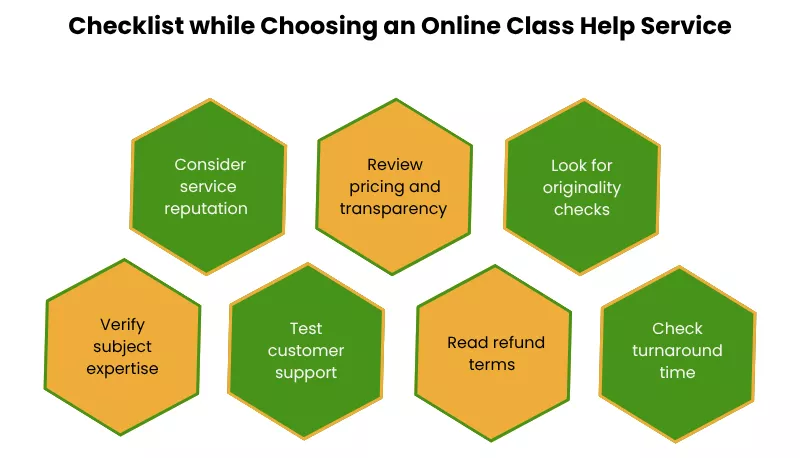
For those who are confused as to what to compare before hiring an online class service, keep these factors in mind and get the services you deserve. Check here:
The most important factor when hiring an online class taker is knowing their qualifications and proficiency in the subject concerned.
You can check their professional and academic backgrounds. Look for professionals holding master’s and PhD degrees from top American universities, having industry-recognized certifications and technical expertise with LMS.
You can look for specialized teaching licenses, industry credentials like AWS Certified and ACCA. It is also important to assess whether their experience matches your exact goal, for example: school curriculum vs. university-level research vs professional skill building.
A good online class help platform must offer a wide range of subjects along with customization support. Before choosing a company to take your online class for you, check the disciplines like IT, engineering, law, nursing, management, data science, and English.
Not only should you consider subjects, but you must also ask whether customization is available according to the course level, curriculum, grading criteria, and student-specific instructions.
One of the prime concerns of students in the USA is plagiarism detection. Academic integrity online class help is a key requirement, as students do not want to risk their GPA. A responsible online class help provider conducts research, cites resources used, and writes unique solutions.
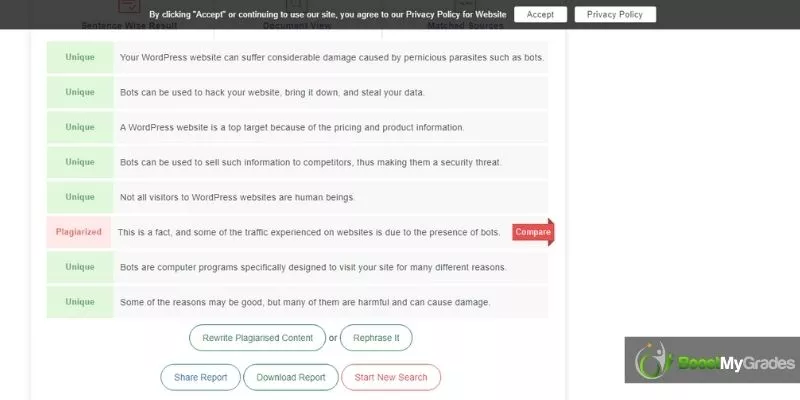
In the top online class helper comparison, original writing help must be the top priority, considering the serious consequences of violating academic integrity. Ask for unedited PDF reports on plagiarism and AI checks, and ensure the document matches the original file details.
Unsolicited reviews from students reveal the actual quality of the services. Reviews and reputation help you determine the service quality and are one of the main criteria for choosing an online class service. Focus on the feedback from the last few months and check reviews on communication, turnaround, service quality, revision support, and others.
Check positive comments about knowledge of the subject and US standards. However, focusing solely on the star ratings can be misleading in many ways. Many low-quality services use automated bot reviews and manipulated third-party profiles.
But at BoostMyGrade, you get authentic reviews from students who have truly benefited.
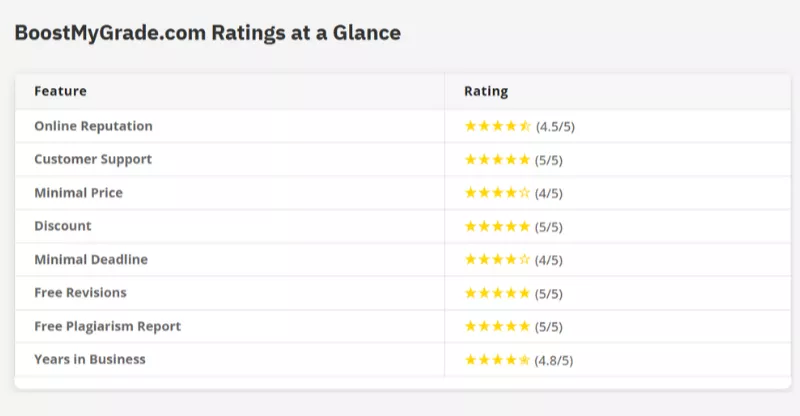
Affordability is one of the main factors for students who already have a tight budget. Most check for complimentary services and an online class help money-back guarantee, which we provide. In this quest for top online helper comparison, a clear pricing policy builds trust and confidence. Look for services that have upfront pricing, clear refund policies, and zero hidden charges.
Students share confidential information like personal details, assignment-related information, files, and sometimes LMS credentials. Therefore, while it is a good idea to hire someone to do your homework, before choosing a service, check whether the service provider has clear measures to protect your academic, payment, and personal information, including credential protection. There should be no unauthorized sharing with third parties.
The reason most students flock to online class help is convenient real-time support to beat tight deadlines and last-minute fuss. The service providers must offer 24/7 unhindered services as questions do not always come up during business hours. Reliable platforms must provide support through instant live chats, email, and calls.
In the quest for the top online class helper comparison, you must also focus on getting more than just answers and solutions. A good online class provider breaks down difficult topics into simple information, uses examples, and identifies your pain points to reinforce learning. You get to strengthen your knowledge of the subject and improve problem-solving skills.
To avoid scams when hiring an online class helper, verify the following:
As you compare before choosing an online class help service, be careful of some indicators like:
Be cautious of exaggerated and unrealistic marketing claims, such as “100 percent success guaranteed” or “the best tutors in the world.” Instead, look for specific, verifiable claims and ask what happens when the promised service is not delivered.
A standard online class help platform asks what is needed, like university credentials, personal details, and academic information. Requests for more personal or academic data are a red flag and can create privacy and security risks. For example, VPN or IP spoofing is now common.
One of the common warning signs is unprofessional communication when selecting an online class help service. Delayed or inconsistent replies, excessive pressure to pay immediately, or no clear customer-support channel is definitely a deal breaker.
Not just claims, but real evidence is more important when it comes to building trust in any online class help service. Check whether the writers use standard plagiarism and AI checking tools like Turnitin and provide free reports alongside. Be cautious of edited and outdated reports, too.
Choosing an online class help service is therefore quite tricky. Hopefully, with this blog, you can now know what to compare before hiring an online class service. You must compare expert qualifications, reviews, privacy practices, and academic integrity of online class help services to get the best out of the services. With our BoostMyGrade services, you do not have to compare further before choosing an online class help service. You get customized and all-inclusive help from us.
Yes, only if it is a reputable service provider. Many students in the USA rely on these services and benefit. However, you must check certain factors before selecting one.
It depends. Every service provider has their own pricing policy. It depends on the subject, the kind of support you need, turnaround time, and the course level.
Yes. You get technical help and effective preparation tips for multiple proctoring settings. We guide you accurately and confidently through every technical setup, concept clarification, and mock test.
Yes, completely. We have been helping students for a long time, having received high ratings and positive reviews from students. We have a strict privacy policy, transparency, and comply with academic integrity standards.
No. AI often generates invalid citations, whereas our experts follow every citation style closely and know the guidelines to cite every type of source accurately.
No. An unnaturally low price can be a risk factor. These services can have a weaker support system with fewer benefits and features. Compare the total value, including personalized help, revisions, confidentiality, etc.
Consider a platform that provides digital whiteboards, session recordings of the classes conducted, note sharing, reliable video, communication tools like live chat, video-call options, and email.
Having a degree can tell you what someone studied, but it does not tell you how well you understand a subject. It becomes essential when choosing a tutor for your online class.
Their subject knowledge, practical experience, and familiarity with online classes shape how well they can support a course. These factors are vital, especially when the coursework involves specialized subjects or advanced academic requirements.
If you are wondering what qualifications do tutors have at class-taking services? Some of them have bachelor’s, master’s, or doctoral degrees, coming with essential certifications or authentic experience. Their credentials vary depending on the course, academic level, and the type of assistance required.
We will further discuss what students should consider while looking for an online tutor.
There is no single degree or certification that every online tutor needs. The right qualification depends on the subject, academic level, and type of course they support.
A tutor helping with an introductory business course may have a different academic background from someone supporting advanced mathematics, nursing, engineering, or computer science. The U.S. Bureau of Labor Statistics notes that tutor education requirements vary by employer and subject, with some positions preferring a bachelor’s degree.
A bachelor’s degree is often the standard for online tutors. Tutors can provide classes and assistance with a wide range of subjects, from the ones they directly studied at university to disciplines that were only peripherally related to their area of expertise.
For instance, a mathematics tutor might have a bachelor’s degree in math, statistics, engineering, or something else similar.
When it comes to students, the critical factor is whether the educational background of their prospective tutor has any bearing on the class they want to receive help with. A degree provides proof of formal study in a particular field, but it should be considered along with other factors while evaluating a tutor’s qualifications.
For more complex studies at an undergraduate or postgraduate level, tutors with postgraduate degrees have a better chance of providing adequate and comprehensive instruction.
After completing a bachelor’s degree program, students have the option of pursuing higher education. At the master’s and doctoral levels, disciplines become more specialized, covering more practical or theoretical aspects.
For advanced subjects like economics, data science, psychology, and computer science, relevant postgraduate qualifications can be valuable.
However, a higher degree does not always make a tutor better. Each case must be assessed individually, as the student’s needs and their relevance to the tutor’s qualifications are paramount.
A tutor might possess certifications that demonstrate their practical proficiency in a field of work, beyond their formal academic training. The same applies to their qualifications, which can include various subjects, depending on their professional background.
A certified tutor and a tutor with an academic degree can be completely different things, as their qualifications might be based on separate bodies of knowledge.
For instance, an academic tutor working with accounting, information technologies, project management, and finance is not the same as a certified practitioner in the same field, who has the relevant professional training and experience.
Therefore, to determine the precise scope of a tutor’s competencies, it is vital to analyze their certifications and degrees as the key aspects of their qualifications.
The former applies to practical skills, whereas the latter denotes the academic knowledge that a tutor has.
Some online tutors may have teaching qualifications or other credentials from educational institutions. It means that they have undergone training similar to conventional teachers, but they may not have degrees in the specific subjects of instruction that one might want.
In most cases, such tutoring services offer help with general subjects at all levels of education.
However, in other cases, a student may need a tutor with a broader set of skills in teaching than one person can acquire at a university.
A degree in teaching allows a tutor to be better equipped when it comes to lesson planning, communication with students, and other aspects of online instruction.

A qualified online tutor needs more than a degree or certification. Their ability to apply subject knowledge, understand course requirements, and work effectively in an online environment also matters. When evaluating a tutor, consider these key qualities:
A tutor should have a solid understanding of the subject they support. They should be comfortable explaining concepts, solving subject-specific problems, and working with coursework at the required academic level. Our team of academic experts can bring specialized knowledge across different subjects and academic requirements.
Experience with similar courses or academic subjects can help tutors understand common coursework requirements, assessment formats, and academic expectations. This is especially important for advanced or niche subjects.
Online courses often involve learning management systems, digital resources, discussion boards, quizzes, and timed assessments. Familiarity with these environments helps tutors navigate course requirements efficiently.
Strong communication is essential for online tutoring. A qualified tutor should be able to explain complex ideas clearly, respond to questions, and communicate effectively through digital platforms.
Check this before you hire someone to take your online class.
Students and courses have different requirements. A capable tutor should be able to adapt their approach to the subject, academic level, course format, and specific instructions provided by the student.
Understanding course guidelines, deadlines, formatting requirements, and assessment instructions is another important quality. A tutor who pays attention to these details is better positioned to provide relevant and consistent academic support.
Matching a tutor to the right subject involves more than checking their general academic background. The tutor’s education, experience, and familiarity with the course should align with the student’s specific requirements.

For students who need help managing an online course, choosing a service to do my online class can also involve checking whether the available tutor has the right subject knowledge and academic background.
A suitable match typically considers:
This approach helps ensure that subject expertise in online class-taking services aligns with the actual demands of the course, rather than relying on a tutor’s qualifications alone.
Learn how our tutor matching process works to see how we select tutors based on their subject expertise and academic background.
Ultimately, the best fit is not necessarily the tutor with the highest qualification. A tutor whose education and experience closely match the course can be better suited to its specific academic requirements.
If you are wondering why online nursing classes are so difficult, know that they are intentionally designed to be rigorous. Challenges of nursing education simply mirror the high-stakes, fast-paced clinical environment of professional healthcare.
While a student has a choice to pick from hybrid, online, in-person, or accelerated second-degree programs, developing critical judgment based on safe, evidence-based decisions under pressure is the ultimate goal. There is no room for mistakes as it involves life-and-death matters.
In this article, we will not only discuss the challenges but also provide effective strategies to pass the online nursing program successfully.
Here are the top reasons that explain why are online nursing classes so hard:
Many students choose the e-learning mode of education to pursue a nursing degree for flexibility. However, online programs are just as demanding as traditional ones. First, students have to complete the core curriculum, which includes standard topics like
Apart from these, students who are enrolled in online BSN and MSN programs have to complete subjects like
These subjects require high levels of discipline and an in-depth grasp of complex medical concepts.
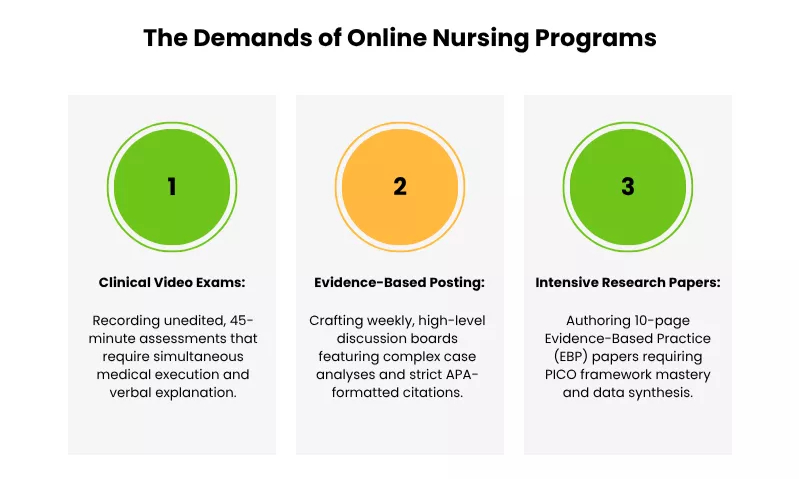
In online education, one of the biggest challenges for nursing students is the academic workload that is no less intensive than on-campus activities. Rather, distance learning becomes more complicated when online students are required to complete specific, labor-intensive tasks remotely to prove clinical competency from home.
Here are some common online nursing class workload examples:
In Health Assessment courses, professors may ask nursing students to film themselves performing a 30-to-45-minute physical exam on a medical mannequin, or a live volunteer (friend/family member). These practices are quite common in institutions like ASU’s Edson College of Nursing and Health Innovation and Western Governors University (WGU).
The common issues faced by students are:
Students have to write detailed, evidence-based posts using APA 7th Edition formatting every week in online nursing discussion forums. These academic tasks are:
Time management becomes challenging as they also have to complete their clinicals, as well as regular coursework activities.
Writing 10-page research papers on Evidence-Based Practice (EBP) is a standard graduation requirement for online BSN and MSN programs.
However, many nursing students have clinical skills but are not trained academically in formal research. Students generally struggle with the PICO formula in translating a real-world clinical issue. The formula of Population, Intervention, Comparison, and Outcome requires a high level of database literacy. Other challenges are:
One common myth is that all online nursing degrees are “fully” online. There are still hundreds of hours of hands-on clinical rotations to be completed. Also, it is difficult to stay focused during online classes after a hectic clinical.
Furthermore, for online students, the challenge of finding “preceptors” (mentors) and securing positions in local hospitals or clinics can be yet another hurdle. This is a logistical burden, which is far more difficult than in regular programs, where the school typically arranges clinical placements.
Success depends entirely on time management for nursing students online. It’s easy to get behind if there’s no schedule. Students often have to balance their job or family responsibilities with tight deadlines.
There is no face-to-face reminder from professors as there would be in traditional classrooms. It is your responsibility to make sure you are current with each lecture and quiz.
The ultimate goal for any undergraduate student is to pass the NCLEX-RN. This exam uses a “computerized adaptive testing” format that is notoriously difficult.
Online programs use “proctored exams,” which monitor you through your webcam, and many nursing courses often require around 75–80% just to pass.
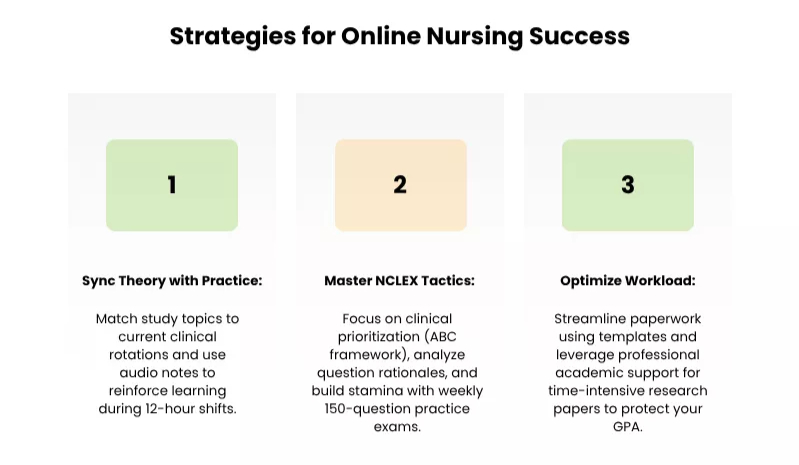
These study tips for online nursing students will help you manage your time and complete the course successfully:
The 12-hour shift schedule and digital lectures can be tricky to balance. To keep your GPA high and develop clinical skills, follow these focused study tips for online class success: